
Five key conclusions from the Living Places Living experiment
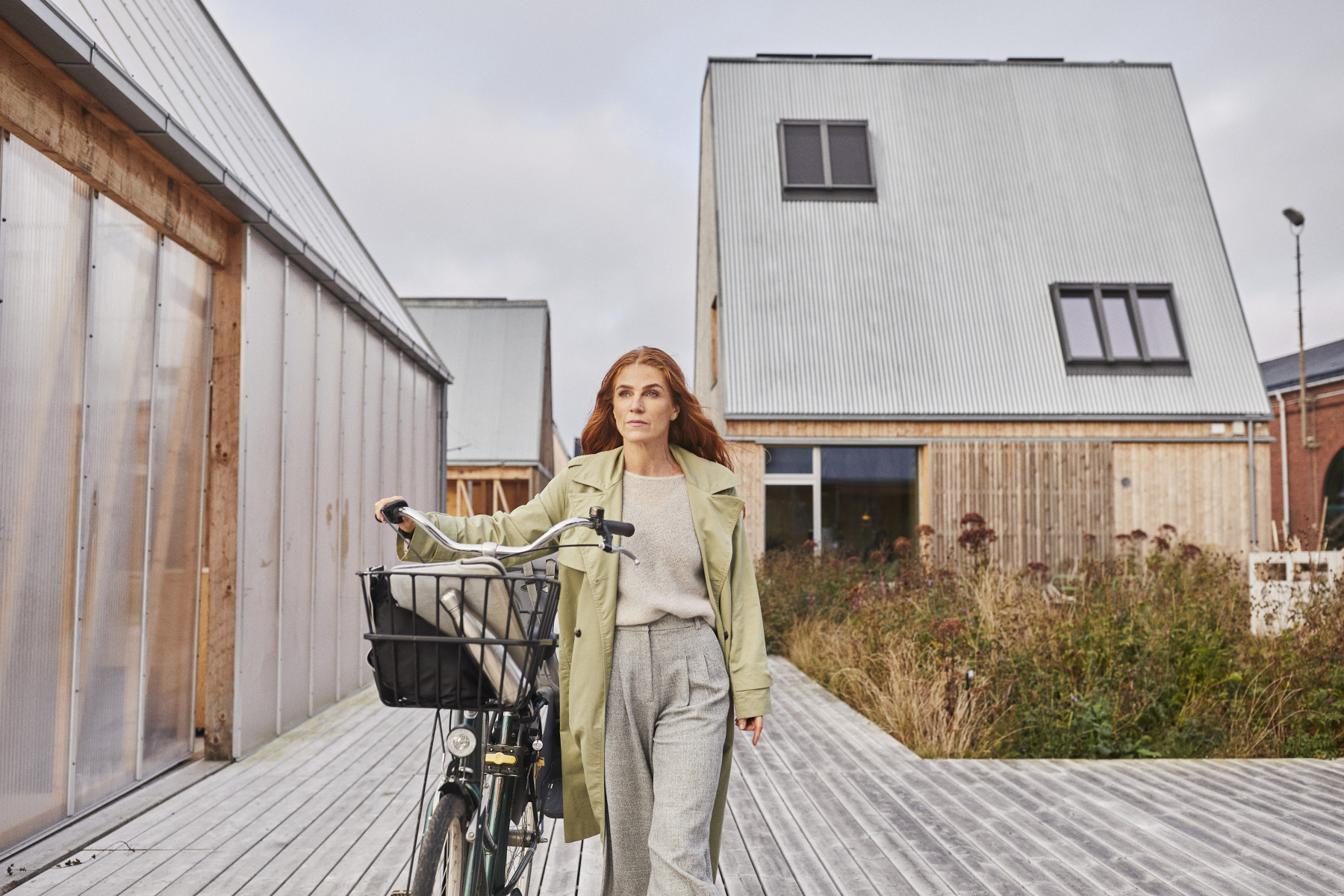
After testing Living Places Copenhagen for two months earlier this year, new data makes it is clear that there is a strong correlation between a high-quality indoor climate and human well-being.
In July and August 2024, VELUX Group invited nearly 100 architects, entrepreneurs, designers and journalists from 12 countries to live at Living Places Copenhagen as part of an experiment that builds on years of research led by VELUX Group in scientifically monitoring different model homes to better understand how building design impacts residents' comfort and satisfaction while assessing indoor environmental quality and its effects on human well-being.
Living Places explores how to build homes with an ultra-low CO2 footprint and an optimal indoor climate using standard materials, methods and technologies available today.
Using 17 environmental sensors strategically placed in the two houses, a questionnaire as well as personal testimonies, VELUX Group examined the houses' indoor comfort performance in terms of indoor air quality, thermal comfort, natural light levels and noise as well as guests’ perceptions of the houses’ functional comfort, such as the layout, their experiences with the community and atmosphere, and their overall satisfaction with the houses.
As a concept and experiment, Living Places has been tremendously successful, delivering on both indoor climate and human well-being. That is a major step towards implementing Living Places principles in other buildings. Going forward, we now scale the concept in cooperation with pioneer partners, says Lone Feifer, Director of Sustainable Buildings, VELUX Group, who shares five key conclusions from the experiment.

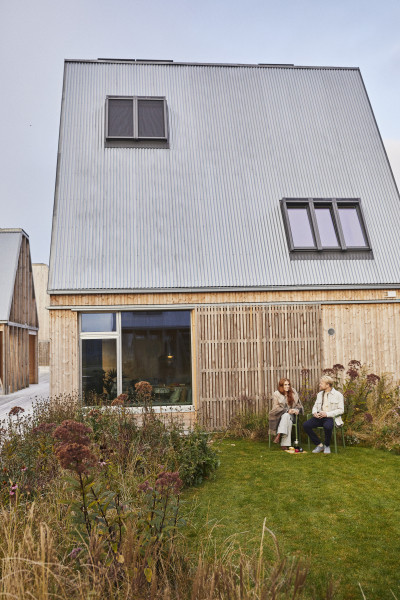
Five key conclusions from the Living Places Living experiment
1. Living Places can inspire and showcase how to build sustainably
For over 20 years, the VELUX Group has initiated and participated in more than 30 demonstration buildings exploring the future of healthy buildings through full scale experiments. In 2021, VELUX Group launched an open innovation process to change the way we build today towards more sustainable practices and to decarbonize buildings. The result, Living Places, shows that it is possible to build more sustainable and healthy buildings using standard materials, methods and technologies that are available today.
2. Healthy buildings that are good for people and the planet can be achieved by applying a holistic approach focusing more on comfort, energy and environment parameters
Advocating for the well-being of people and the planet requires a holistic approach to sustainable living and building practices that looks at the entire life cycle of a building, from design and construction to use.
3. The way we design our homes can significantly influence residents' well-being and their way of living
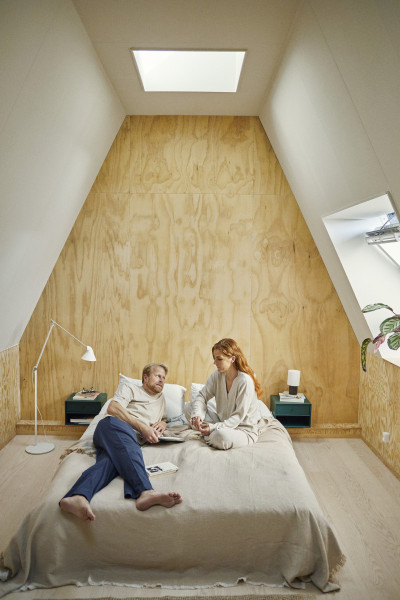
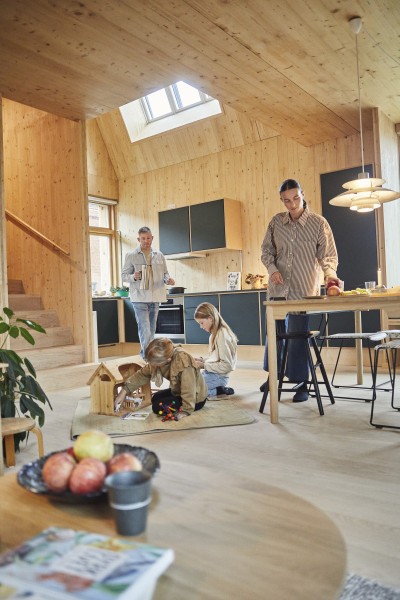
Our homes are an important part of our overall health. We spend 90% of our time indoors, yet 1 out of 3 Europeans is exposed to at least one indoor climate hazard such as lack of daylight, cold, damp or noise, according to the Healthy Homes Barometer 2022 and Healthy Buildings Barometer 2024. The way we build and live directly impacts our physical and mental health. The design of the house and indoor environment has a strong positive impact on residents' well-being, with over 70% of Living Places guests reporting improved mood, increased relaxation, and a sense of connection to nature while experiencing minimal negative effects.
4. The design of Living Places Copenhagen, which optimizes daylight and natural ventilation, has been well-received by guests
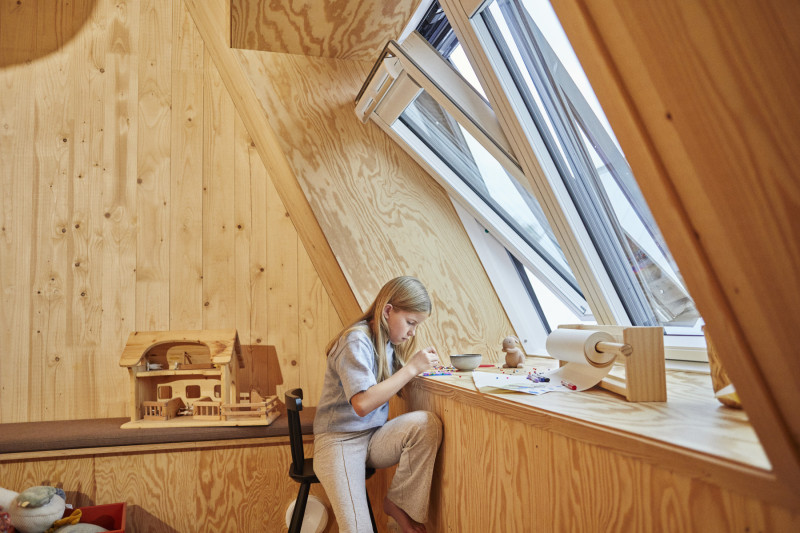
Designed to optimize daylight and natural ventilation, 83% of all guests favoured spending time in rooms with more natural light while 90% also found it easy to adjust the shadings to ensure an optimal indoor environment. As part of creating well-being at home, functional factors like design, layout, temperature, lighting, and indoor climate can invoke immediate feelings of physical comfort in a building. During their stay, 85% of the guests perceived the houses to fit their functional needs.
5. Living Places Copenhagen has achieved an indoor thermal environment within the comfortable range according to the European Standard
On a conceptual basis, Living Places had been awarded a first-class indoor climate. The results indicate "comfortable ranges" which reflect the actual performance during the experiment period which included the indoor temperature being within the best level of the European Standard (EN 16798-1:2019 standard (Category I)) 89% of the time in one house and 90% of the time in the other and within the comfortable range of the European Standard (EN 16798-1:2019 standard (Category II)) 98% of the time in both houses.
To learn more visit: Build for Life - Living Places Learnings
About Living Places
The Living Places concept is developed by the VELUX Group in partnership with EFFEKT architects and Artelia engineers. The partners opened the doors to the first prototype in Copenhagen in April 2023. Living Places has been nominated for 14 national and international architecture and design awards and has won 8 awards. Go on the virtual tour of Living Places Copenhagen or read more about Living Places.
About the VELUX Group
VELUX roof windows have been bringing daylight and fresh air into peoples’ homes around the world for more than 80 years, creating better living environments. We offer a range of products including roof windows and modular skylights, decorative blinds, sun screening products, and roller shutters, as well as installation and smart home solutions. They help create bright, healthy, and energy-efficient places for people who live, work, learn, and play under the roof. We work globally – with sales and manufacturing operations in 37 countries and around 11,900 employees worldwide. The VELUX Group is owned by VKR Holding A/S, a limited company owned by the Villum Foundation and members of the Kann Rasmussen family. In 2023, the VELUX Group had a total revenue of EUR 2.91 billion while VKR Holding had a total revenue of EUR 3.97 billion. The same year, the Villum Foundation and the VELUX FOUNDATION donated a total of EUR 184.6 million in charitable grants.
For more information about the VELUX Group, visit velux.com.